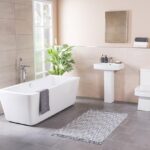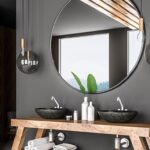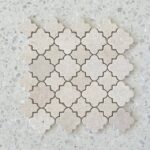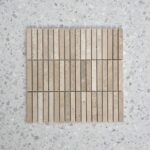
When we think of interior design elements that have withstood the test of time, mosaic tiles are probably one of them. With a rich history dating back to ancient times, these intricate, small-format tiles have moved from adorning Roman palaces to finding their way into today’s modern bathrooms, and it’s easy to see why.
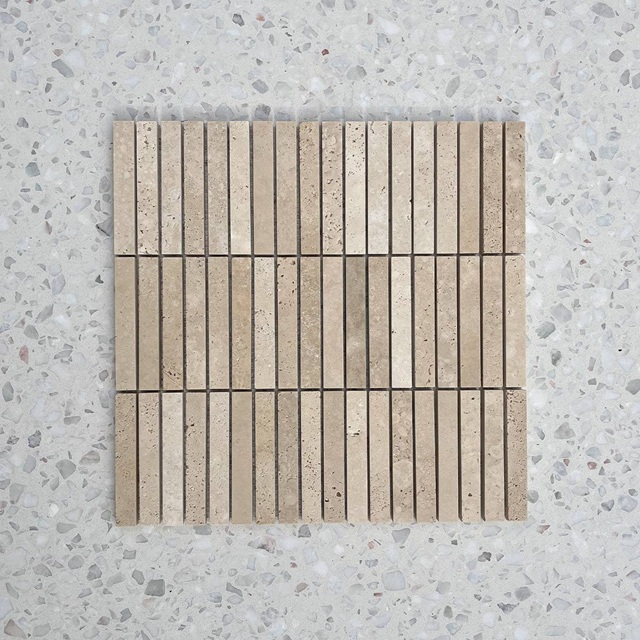
Mosaic bathroom tiles are decorative delights, an opportunity to add flair and personalisation to personal spaces. But beyond their beauty, mosaics are also practical. Thanks to their small size, they’re perfect for navigating curves and corners on bathroom floors, where larger tiles can feel restrictive.
Plus, mosaics tend to offer good grip underfoot because of all the grout lines between the small pieces, which comes in handy in wet areas. Another advantage is their versatility. They come in a wide array of materials available, including luminous glass, timeless ceramic, rugged stone, and shimmering metal. So, if you want to embrace the beauty and practicality of mosaic tiles, there are many ways to do so.
Mosaic Floors
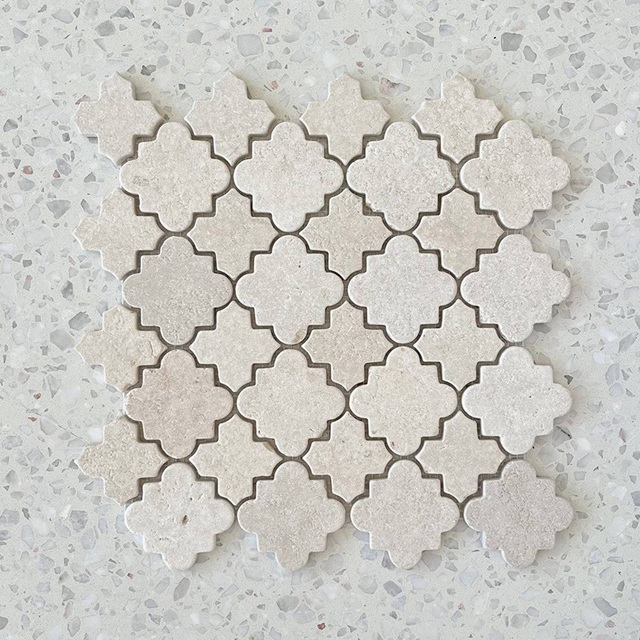
Thanks to their intricate look and natural grip underfoot, mosaic bathroom floor tiles are an excellent choice for a bathroom. A classic and simple way to design bathroom floors with mosaic tiles is to feature a motif in the centre. This creates a striking focal point while keeping the rest of the tiles understated.
Another popular approach when laying mosaic bathroom floor tiles is to create geometric patterns, such as hexagons, chevrons, or herringbone designs. This design adds a modern and dynamic touch to personal spaces.
If you want to achieve a softer, more artistic feel, you could opt for flowing, curved patterns. Wave-inspired designs in shades of blue, green, and soft neutrals that mimic the look of water, waves, and aquatic motion can create a spa-like feel in the bathroom.
You can also use contrasting colours to define zones. For instance, you can place darker mosaic tiles around the shower area or a border of patterned tiles to frame the vanity. This approach creates a subtle visual interest without overwhelming the room.
Next, you can mix different tile sizes and finishes on the floor, such as combining matte and glossy mosaics to add depth and texture. Glass mosaic tiles are usually glossy because of the smooth, reflective nature of glass. When paired with matte ceramic, porcelain, or honed stone mosaics, they create a balanced contrast. If you love a touch of luxury, consider metallic accents or glass mosaics to catch the light and create a shimmering effect under bathroom lighting.
Feature Wall
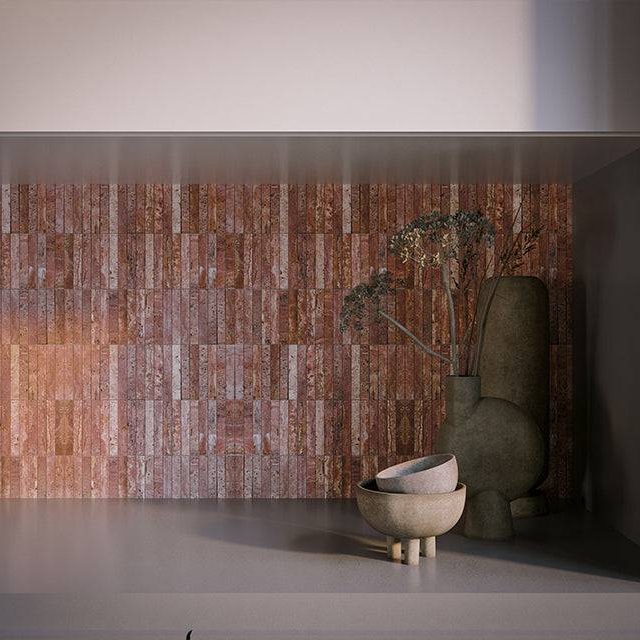
An accent wall in the bathroom can draw attention to a feature you want to highlight, like your mirror, vanity, or tub. At the same time, it distracts from less exciting elements, like the toilet paper holder. While you can create feature walls with paint or wallpaper, mosaic tiles offer added texture, durability, and easy maintenance.
Plus, the shapes, colours, and designs of mosaic tiles, along with installation patterns, can turn these walls into miniature works of art. They can help you design a focal point that complements your flooring and elevates the overall bathroom style.
Design-wise, mosaics with subtle marble veining or classic patterns can help you create an elegant feature wall. They bring natural depth and a luxurious feel to the space and can look beautiful behind a vanity or tub. Natural stone mosaics in geometric shapes (hexagon, diamond, arabesque) add textural interest.
You can choose to cover an entire wall with an intricate, playful design as a focal point, or keep it simple with feature bath panels. When paired with a slim border above the bath, a bath panel feature can be a subtle but effective way to design a statement look that modernises your space.
Backsplash
As you may know, a backsplash is the wall area directly behind a sink or vanity. It protects the wall from water splashes and stains while also adding a touch of style. It’s usually smaller than a full wall and often runs the width of the sink or vanity.
While its main job is functional, a backsplash is also an opportunity to introduce colour, texture, and pattern. Again, mosaic tiles are a great choice for this purpose. Their small size allows for intricate patterns, varied textures, and subtle colour play. They can help you create a visually striking feature that complements floors and accent walls.
A small panel behind a sink can reflect colours or patterns from other areas and create cohesion without overwhelming the bathroom. This helps a bathroom to feel coordinated and stylish.
For instance, if your accent wall features marble-look mosaics behind the vanity or tub, a matching backsplash with similar veining can reflect that elegance on a smaller scale. Similarly, if your floor features a geometric mosaic pattern, a backsplash behind the sink in a smaller-scale geometric mosaic can echo the shapes.