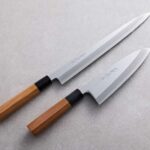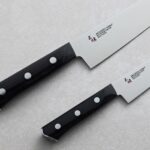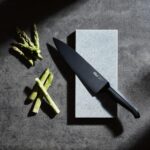
Have you ever wondered how professional chefs get those perfect slices no matter what they cut? The answer is quite simple, it’s their knives. Having the right tools in the kitchen can help you improve your skills and make you a better cook. Even if you don’t aspire to be a professional, you should buy knives that have different purposes and know how to use them.
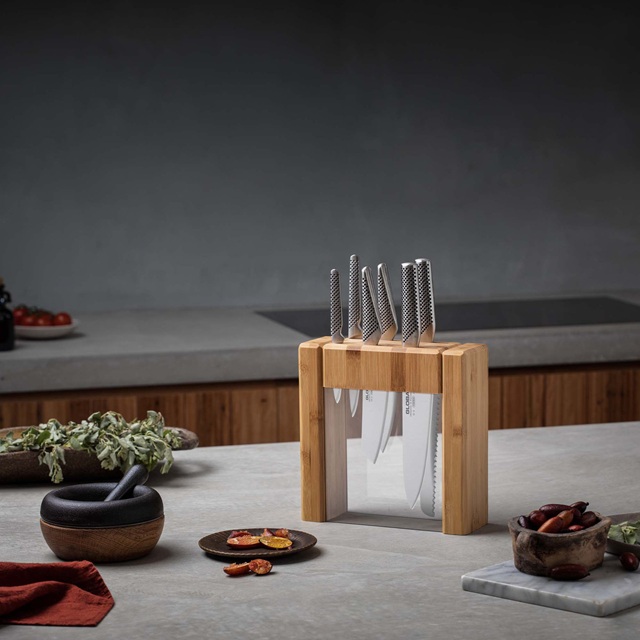
Types of Knives
It can be confusing having so many different knives in the kitchen. You don’t always know which one is meant for what. But once you have a set in your home, it’s better to use it properly than damage it or, even worse, hurt yourself.
Chef’s Knife
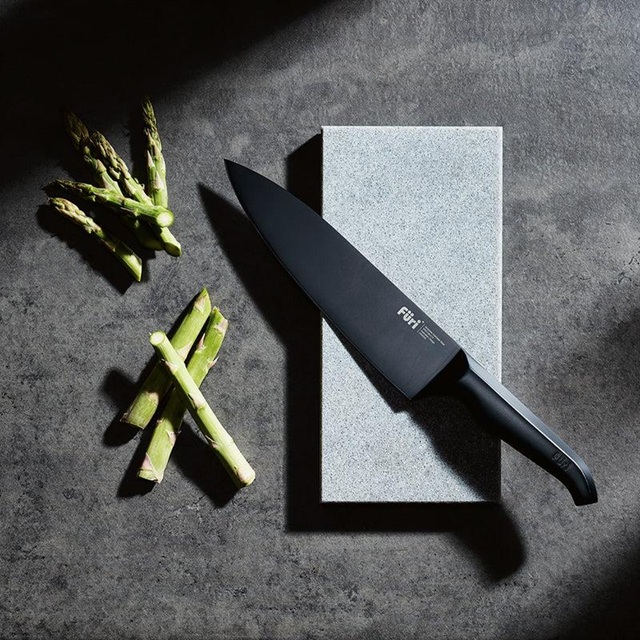
This type of knife is also known as a cook’s knife. It’s a very versatile piece and an absolute star in the kitchen. It’s often considered a must-have no matter your cooking experience. Some chefs even say it’s like an extension of their hand.
These knives are usually between 20 and 25 cm long, although you can get one as short as 15 cm and as long as 35 cm. The length mainly depends on your experience and skills. Some people need some time to adjust to the length. But keep in mind that the longer the blade, the safer it is to use.
These are long-edge knives with a curved blade and a round-up tip. That’s why they’re one of the most versatile and reliable kitchen knives. You can use them to chop, mince and dice a lot of things, such as veggies, fruits, meats and herbs. Once you get comfortable with the length and weight, it’ll be easier to work. Remember not to use this type of knife on small produce because it won’t be precise.
Paring Knife
A paring knife is considered to be a shorter version of the chef’s knife. It’s meant for the same tasks, just on a smaller scale. But don’t let its size dissuade from using it because it’s incredibly practical. The blade is shorter but super sharp, and the standard size for a knife like this is 9 cm.
It’s perfect for tasks that require precision, like trimming meat, slicing cheese and tomatoes, peeling fruits and veggies, deveining shrimp, removing seeds or creating a garnish. Don’t use it on hard produce. It’s not meant for cutting carrots, squash, beetroots, parsnips or similar products.
It doesn’t have enough weight to cut them, and if you push it hard, it can get damaged, break or you can even hurt yourself. So, make sure you use it on the right products. This is a very convenient and practical knife to have. You’ll be reaching for it a lot from your knives set.
Utility Knife
Just as the name itself suggests, these knives are utilitarian, which is a class of its own. They’re multipurpose and can do almost anything. It’s a true blessing having them in your set. Size-wise, they’re something between a chef’s knife and a paring knife. They’re usually 15 cm long and can have either a serrated edge or be straight-edged. That’s why they’re able to handle multiple tasks in the kitchen.
People use it for mincing herbs, slicing and chopping fruits, vegetables and tender meats, cutting sandwiches and opening different types of bags around the house. You’ll hear a lot of chefs calling it a “knife of all trades” and that’s not far from the truth.
Boning Knife
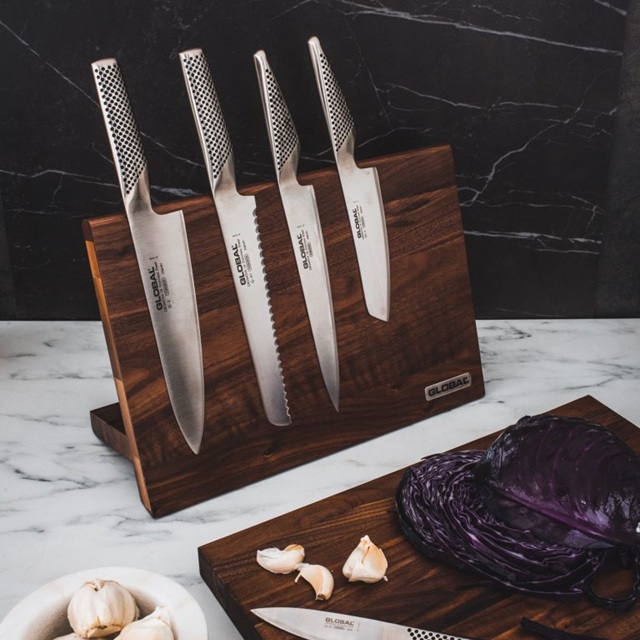
The boning knife is made to separate meat from the bone. It’s very efficient and reduces meat waste by being precise. This knife will make deboning simple and easy by cutting through connective tissues and joints. You can work on anything from small anchovies to any kind of fish to a chunky slice of pork.
Its narrow, thin and flexible blade allows you to glide around and follow the curves of the meat easily. The pointed tip helps you take the skin off the meat. There are two main versions of this knife: flexible and stiff. The flexible one is better for deboning and separating the meat, and the stiff one will help you cut down large pieces of meat into small cuts. Just make sure you don’t cut into the bones but around them.
Bread Knife
These kitchen knives have long and serrated edges. They’re great when you want the cut to be effortless and clean and not damage the bread or tear it apart. But even though it has that name, this is a knife you can use on things other than bread; one example is baked goods such as cake. Some people cut vegetables and fruits like bell peppers and watermelon.
Moving it like a saw without any pressure is the best way to use it. It’s this sawing motion that doesn’t allow the inside of the food to get compromised. You might find it hard to keep this knife sharp, but there’s a sharpening tool for every knife.
Carving Knife
Carving kitchen knives are not that commonly used. They’re usually on the table when there’s a roast around. They will give clean and precise thick or thin cuts of beef, pork or roasted turkey. They are long, narrow and taper to a point. The indentations on them make the meat slide off and not stick on the blade. Whether you’re a roast-meat lover or not, this knife is a must-have in your cooking knife set.
Knife Blade Materials
- Stainless steel – very popular, strong, durable, rust-resistant and corrosion-resistant.
- Ceramic – non-metallic, non-magnetic, very lightweight, durable, allows different colours, but can be a bit fragile.
- Titanium – very hard, durable, magnetic, rust-resistant, long-lasting.
- Damascus steel – strong, durable, wavy pattern, shatter-resistant, very sharp, long-lasting.