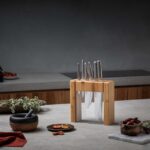
It can be so frustrating when you have to put all your weight into a slice just to get through a sweet potato. Then, you see a chef effortlessly glide through food with zero effort, and you realise your tools are holding you back. The struggle of a dull knife versus the absolute pleasure of true, effortless precision is night and day. You deserve that effortless experience in your own kitchen.
That’s where Japanese knives come in. When you’re ready to upgrade your kitchen and transform your cooking, you need to grab professional chefs knives that deliver superior sharpness, amazing edge retention, and genuine beauty. They will change the way you feel about preparing food.
What Sets Japanese Knives Apart?
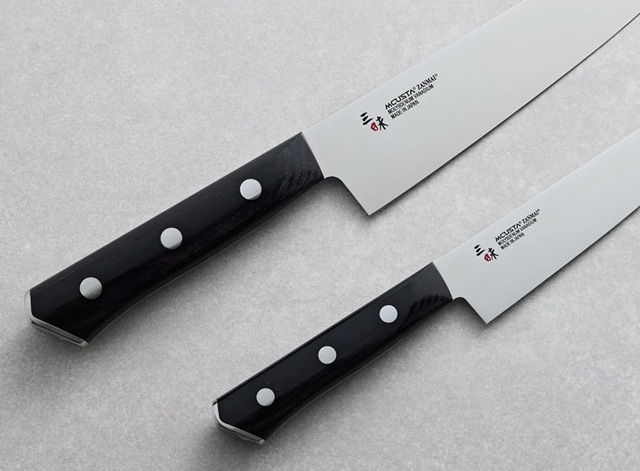
The secret behind these knives comes down to two main things: the steel and the edge. When you search for chefs knives, you’ll notice Japanese steel is much harder than what you usually find. That hardness means they can sharpen the blade to an incredibly fine, razor-sharp edge, and it stays sharp for much longer.
Western knives are usually sharpened at a wider angle, but the Japanese technique creates a thinner, more precise angle, often 10 to 15 degrees. That geometry is what lets you slice through food so effortlessly. It’s that combination of superior hard steel and a thin, sharp edge that makes all the difference in your cooking.
You know, the result is that you don’t have to push down hard at all; the knife just does the work for you! You’ll find you can slice vegetables so thinly that they look almost transparent, which is impossible with a standard dull knife. Plus, the construction often involves layers of steel, giving them that beautiful, patterned finish you see. The Damascus pattern isn’t just for looks; it helps food release from the blade more easily. It makes the whole prep process faster and genuinely more enjoyable; you really feel like a professional chef when you use them.
Types of Japanese Chef Knives
The Japanese Chef Knife (The Gyuto)
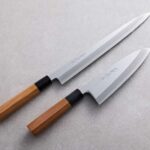
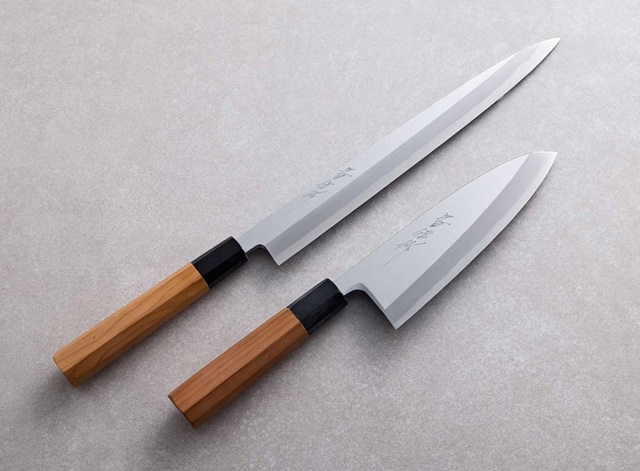
If you’re looking for a great all-purpose workhorse, you should check out the Gyuto. Think of it as the Japanese version of the classic Western chef’s knife. It has that pointed tip and a curve on the blade that lets you do that gentle rocking motion when you’re chopping herbs or dicing vegetables. It’s perfect for almost any job you can think of: slicing meat, prepping vegetables, or even doing fine mincing. If you only want to buy one professional knife for your kitchen, the Gyuto is probably the one you should choose because it is so versatile.
The All-Rounder (The Santoku)
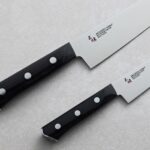
Another really popular choice, especially for home cooks, is the Santoku. The name actually means ‘three virtues’ (meat, fish, and vegetables), which tells you everything you need to know! Unlike the Gyuto, the Santoku has a much flatter blade profile and a rounded, sheep’s foot tip. It’s better for quick, straight-up-and-down chopping rather than the rocking motion. It’s a slightly shorter knife and feels great in the hand. You’ll find that many new chef knife buyers prefer this one because it’s comfortable and handles almost any basic kitchen task perfectly.
The Paring Knife (The Petty)
Every kitchen needs a good small knife, and the Japanese answer is the Petty. Don’t let the small size fool you; this is an essential tool for all those small, precise jobs. You should use it for peeling vegetables and fruit, coring strawberries, or doing any delicate, detailed cutting that a big knife can’t handle. The amazing sharpness that you get from the larger Japanese chef knives is built right into this little one. It’s super handy to have ready when you need to switch from big chopping to fine detail work on the fly.
Maintenance is Key: How to Keep Them Sharp
Since these knives are high-performance tools, they need a little bit of care, but it’s totally worth it. The first, and most important rule, is never, ever put them in the dishwasher! Harsh detergents and high heat will damage that perfect edge and can even ruin the beautiful handles. You should always hand-wash them immediately after use with a soft cloth and a little soap.
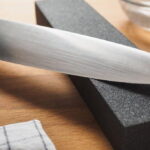
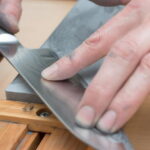
And you need to dry them right away, especially if you get a carbon steel knife. Those can rust really quickly if they are left wet. They are a high-maintenance friend! Also, you should never use one of those electric pull-through sharpeners; they can damage the delicate, thin Japanese edge. The best tool for maintenance is a Whetstone (or sharpening stone). They take a little practice, but they allow you to keep that exact, razor-sharp angle the knife was designed with. You should look for a professional sharpening service now and then, but a Whetstone lets you maintain that edge in between.