
Australians have much to be proud of: the food, the people, the oceans, the animals, the nature, and most importantly, the land that we call our own. Behind the rich history and passed-down traditions stands the resilience and survival of the indigenous people of Australia. That’s why the Aboriginal flag is much more than just a flag. It’s a symbol of survival, endurance, and culture as old as the continent itself.
Few flags can convey a powerful message with such a simple design, and the indigenous flag of Australia does that seamlessly, symbolising the land and its people with just three colours, two shapes, and one striking design. Its simplicity makes it instantly recognisable while carrying deep cultural and historical significance.
Historical Background of the Australian Aboriginal Flag
Australia, like many other countries around the globe, has a complicated history of colonisation and oppression of the indigenous populations. Since the very first foreign settlers on Australian territories, indigenous people have been forced to give up their land and rich history for the Western views of the colonising nations.
However, since the land rights movement in the 1970s, the Aboriginal people have reclaimed a part of their history and rights as the original Australian population by getting their own flag, a symbol of resilience and survival of the long years spent in oppression and cultural dislocation.
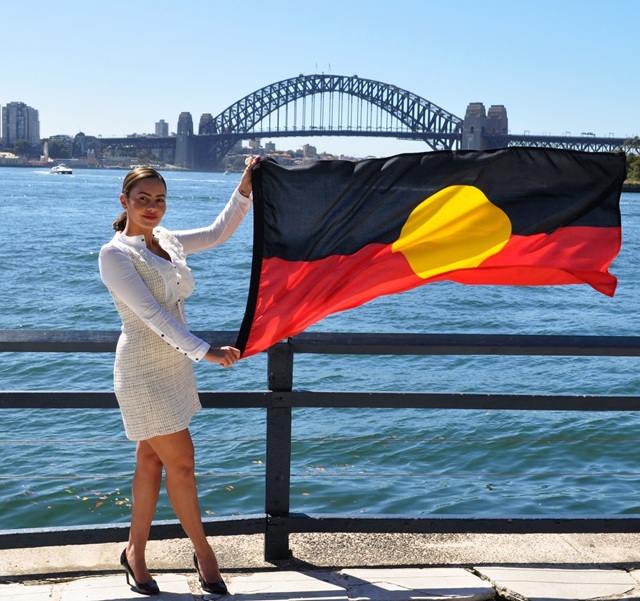
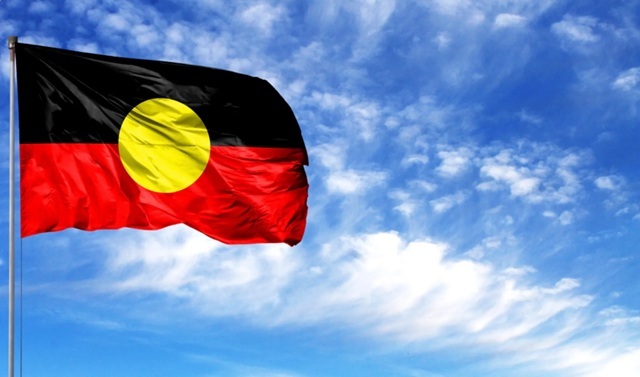
The flag is composed of two rectangles that divide the flag horizontally in half. The top rectangle is black in colour, representing the Aboriginal people. The bottom rectangle is blood red, representing the earth and the spiritual connection between the land and the people. The flag features a large yellow circle at its centre, symbolising the sun, the giver of all life.
The Australian Aboriginal flag was first flown in Adelaide in July 1971, as a symbol for the land rights movement during National Aborigines’ Day. In 1995, the flag was officially proclaimed as the ‘Flag of Australia’, solidifying its role as a powerful symbol that represents the Australian nation, its people and their endurance.
Cultural Significance
Although every nation around the world has its own flags and meaning behind them, few have a history as powerful as the one behind the design and origins of the Australian indigenous flag. The flag not only symbolises the Australian indigenous people and their history of endurance and colonisation, but also their connection to the land, and their love for the territories they call their home.
Although visually stunning, the flag’s visual elements are to showcase a much deeper message than just an aesthetic representation of a certain group of people. Every part of the flag, from the shapes to the sizes, colours, and positioning of the components, stands to tell the legacy of the people who fought against discrimination and dislocation, and managed to preserve their ancient customs against the strong opposition from the Western settlers. The flag today serves as an emblem of hope and unity for every indigenous person who has passed down their traditions and culture against all odds.
Official Recognition and Proper Use
With the official recognition of the Australian Aboriginal flag, an official set of rules for its display and use has been set to provide dignity and honour every time the flag is flown or displayed.
- Flags should always be flown during important holidays and days that commemorate the country’s history. All flags should be used with dignity. This means that they should in absolutely no case be used to cover, unveil a monument, or as a simple decoration without any meaning behind it, such as being used as a seat cover or a tablecloth.
- The flag mustn’t be allowed to fall or lie on the ground, nor should it be flown during nighttime unless properly lit. If flown alongside other important Australian flags, or next to the flags of other nations, all the displayed flags should be the same size, and the flagpoles should be identical in height.
- It is essential to consult the Aboriginal community before displaying the Indigenous flag and to ensure they are briefed on the way and occasion for which the flag is being flown.
- Every flag used to represent the Australian nation and its people is of equal importance, and individual circumstances dictate which flag, if not all, should be displayed.
- The Aboriginal flag also mustn’t be displayed upside down, meaning the black colour should always be at the top, and the red at the bottom.
What National Pride Means Today
National pride is the key element that binds every individual to their home country. Since Australia is one of the richest countries in the world in terms of history, diversity, and traditions, national pride takes a different form based on who defines it.
However, there are a few things that unite every Australian, and one of those is their shared love for the land they call their home. Australian values are extremely important to preserve and keep with the highest of honours, teaching future generations the unity and respect that exists between the many different cultures sharing the Australian land.
Every Australian is proud of their nation, their freedom, and equal opportunities for all. Although overcoming adversaries is never easy, the ability to have an opinion or a belief and freely share it amongst the people of the nation is what makes Australian national pride truly special and the key to a peaceful and stable society.
Conclusion
In conclusion, the indigenous flag of Australia is a powerful symbol that represents the unity, resilience, and endurance of the Aboriginal people. From its first origins in the 1970s, the Aboriginal flag has been used to represent indigenous rights, traditions, and cultural values, standing up for the years spent in oppression and dislocation. Today, the indigenous flag is an official flag of Australia, which represents the importance of unity and the traditions that first formed the Australian nation.