Every extra pass a scrubber makes is time you are paying for. Over the course of a week, a month and a year, a ride on scrubber with the wrong cleaning path adds up labour, battery cycles and frustrated operators.
A scrubber that is too small leaves operators doing laps all shift, while one that is too large can’t get down your aisles, through doorways or around fixed equipment. The key measurement is the cleaning path, the width of floor the machine scrubs in a single pass.
Why Cleaning Path Matters
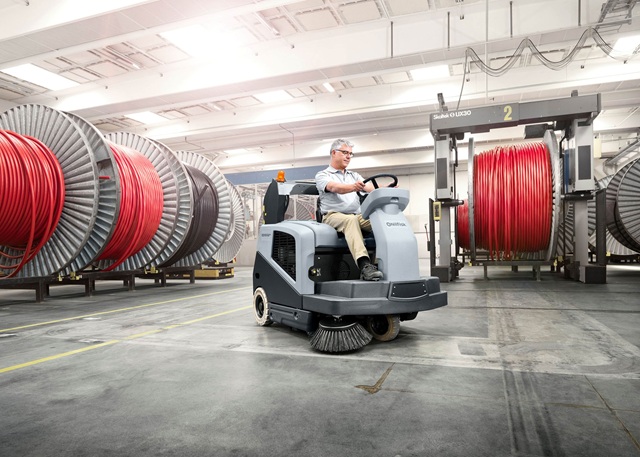
Cleaning path refers to the strip of the floor the machine cleans as it moves forward. The wider the cleaning path, the fewer passes the machine makes, which means higher productivity and lower cost. But a wider cleaning path isn’t necessarily always better.
Wider machines are heavier, larger, require more room to manoeuvre, use bigger tanks and batteries, and cost more to purchase. The aim is the widest path your space can realistically accommodate, not the widest path available.
Start with Your Narrowest Aisle
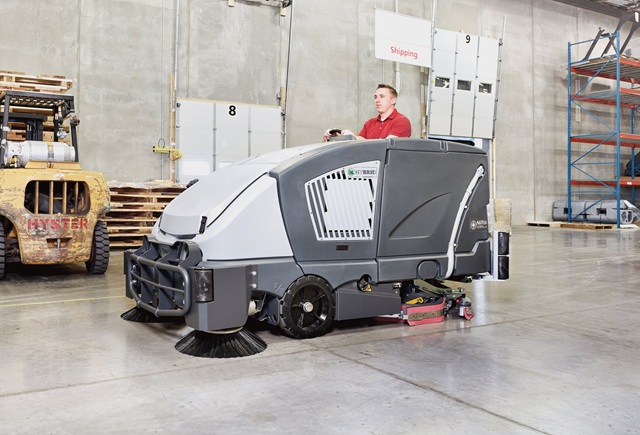
Before comparing models, walk around your facility and measure the smallest openings: aisle width between racks, doorways, lift entrances, and space between displays or machines. The smallest of these determines the maximum width for the machine.
Remember that the cleaning path and the machine’s overall footprint are different things. Allow some manoeuvring room as well. If your aisles are almost the same width as the machine, it will be difficult for the operator to manoeuvre it, making the operation slow and inefficient.
Small Facilities (Under 2,000m²)
For smaller facilities such as retail stores, classrooms, hallways and clinics, a compact cleaning path from about 300mm to 700mm works well. Mobility is more critical than speed here. Machines in this range can easily cope with narrow aisles, tight corners and crowded spaces without disrupting traffic.
Disc brushes are the common choice for small areas. They are ideal for cleaning smooth and glossy surfaces such as vinyl flooring, sealed concrete and tiles, where light to medium pressure is sufficient. Battery and electric motors are the best choice for indoor use as they produce no noise or fumes.
For floor spaces that fall into the upper end of this category, a compact floor scrubber ride on in design can offer much of the speed of a larger machine at a price closer to a walk-behind.
Medium Facilities (Between 2,000m² and 8,000m²)
Warehouses, supermarkets, schools, hospitals, and mid-level production areas typically fall into the medium category. A cleaning path of around 700mm to 900mm is ideal for this size range – wide enough to cover large areas efficiently but narrow enough to fit through standard doors and aisles.
This is also where cylindrical brushes start to become an appealing option. They generate more pressure than most disc brushes and perform well on uneven surfaces. They can also pick up light trash as they scrub, thus cleaning and sweeping in one go. If your floors generate dust, packaging waste, or grit, this eliminates the need for a separate sweeping step.
Battery power remains the most practical option for most medium sites. It runs quietly, meets indoor air quality requirements, and can support several hours of continuous operation.
Large Facilities (8,000m² and Above)
Ride-on floor scrubbers with cleaning paths from 900mm to 1,500mm are ideal for distribution centres, production units, assembly lines and logistics hubs. At this level, even slight differences in width can mean hours saved each week. Cylindrical brushes with high down-pressure handle persistent dirt, oil and other industrial contaminants.
The power source has more variability here. Battery machines are still suitable for indoor locations, whereas LPG is preferred for 24/7 operations, as refuelling is quicker than battery recharging. Diesel equipment is recommended for outdoor cleaning, yards, and rough surfaces, where heavy duty and extended runtime are critical.
Larger industrial cleaning equipment comes with larger solution and recovery tanks, meaning fewer stops for refilling and emptying during the shift.
Other Factors to Consider
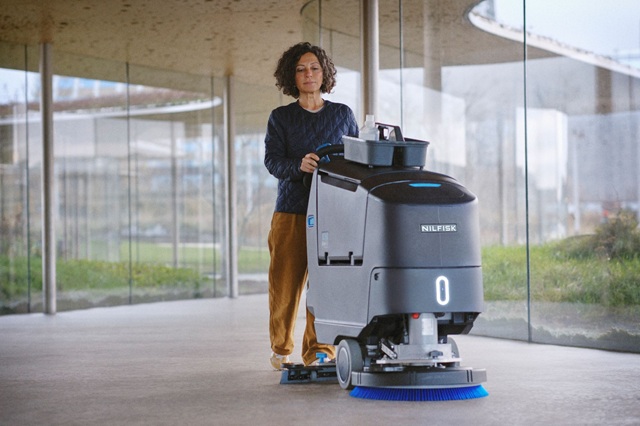
The cleaning path is the first thing to consider, but it is certainly not the only one:
- Type of brush: A disc brush works well for smooth floors, while a cylinder brush suits textured floors and debris. Dual or specialty configurations are meant for specific jobs.
- Tank size: Bigger tanks allow longer running times between refuelling. Match the tank size to your cleaning routes.
- Operating time: Evaluate how long the equipment operates using one tank of fuel or battery charge compared to the cleaning time available.
- Floor conditions: A sloped, rough or dirty floor requires stronger brush pressure and traction.
- Operators’ needs: Seating position, view and controls affect the operator’s efficiency throughout the shift.
Final Thoughts
Selecting a floor scrubber ride on machine starts with a few basic questions. How big is your floor area, how narrow are your tightest aisles, and what are you cleaning off the floor? Use those answers to select a cleaning path, then refine your choice with the right brush type, power source and tank size. A well-matched machine cleans faster, costs less to run and keeps your floors in better condition, which is the real measure of getting the size right.