Welding is a trade that combines real skill with serious risk, since you’re working with intense heat, bright arcs and flying sparks that can cause harm in a matter of seconds. Personal protective equipment, known simply as PPE, is what stands between a welder and these hazards, and it works by shielding the eyes, skin, lungs and ears from the different dangers the job brings.
Important Safety Equipment for Welding
Gloves
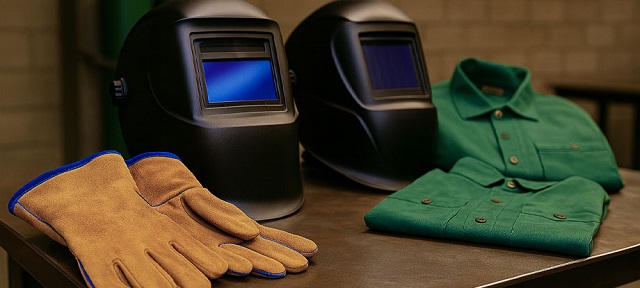
Welding gloves are one of the first pieces of safety gear you’ll want to sort out, since your hands are closest to the heat and sparks throughout the job. Unlike a standard work glove, this essential piece of safety gear for welding is made from thick leather that helps resist burns, cuts and abrasions, while still allowing enough flexibility to hold a torch or electrode steady. Some styles run longer than others to cover more of the forearm, which is worth considering if you’re working with a process that throws off a lot of spatter.
Goggles
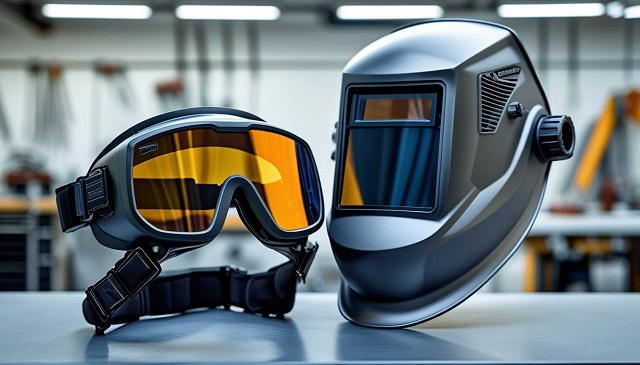
Goggles are essential for shielding your eyes from sparks, debris and grinding dust, especially during prep work before the actual welding starts. They typically sit closer to the face than standard safety glasses, which helps stop small particles from getting in around the edges, and many pairs come with a tinted lens for jobs involving bright light. Since eye injuries can happen in an instant, it’s worth keeping goggles on hand even for quick tasks that seem low risk.
Helmet
A welding helmet protects your entire face and neck from the arc, which produces UV and infrared light intense enough to cause serious eye damage if viewed directly. There are different types of welding helmets, but they all serve the same basic purpose. Passive helmets use a fixed dark lens, while auto-darkening helmets adjust the shade automatically when the arc strikes. Auto-darkening styles tend to cost more, but they let you keep the helmet down between welds rather than flipping it up and down, which saves a fair bit of time on longer jobs.
Ear Protection
Ear protection is often overlooked, yet welding environments can be quite loud once you factor in grinding, cutting and the general noise of a busy workshop. Earplugs or earmuffs help reduce this exposure over time, which matters since hearing damage tends to build up gradually rather than happen all at once. Some welders also choose ear protection that doubles as a barrier against sparks landing in the ear canal, which is particularly useful when working overhead.
Respiratory Protection
Respiratory protection is critical, since welding fumes contain fine particles and gases that can cause serious harm to the lungs with repeated exposure. A basic dust mask might be fine for light grinding, but a proper respirator with the right filter cartridge is needed for most welding processes, especially in confined or poorly ventilated spaces. As you’d expect, the type of respirator required depends on the material being welded, so it’s worth checking what’s suitable for the specific job.
Boots
Boots are a core part of any welding safety equipment checklist, and they’re built with a steel or composite toe cap, which helps protect the feet from dropped tools and heavy materials on a busy worksite. They’re also made from thick, flame-resistant leather rather than fabric, since sparks landing on a standard shoe can quickly burn through and cause injury. Lace-free or covered lacing designs are common too, as exposed laces can catch a stray spark and start smouldering without you noticing straight away.
Apron
A welding apron adds an extra layer of protection over the torso, which can be useful when sparks and spatter are likely to land on the body. Made from heat-resistant leather or other suitable flame-resistant materials, an apron is typically worn over protective work clothing and can provide additional coverage without the bulk of a full jacket.
Jacket
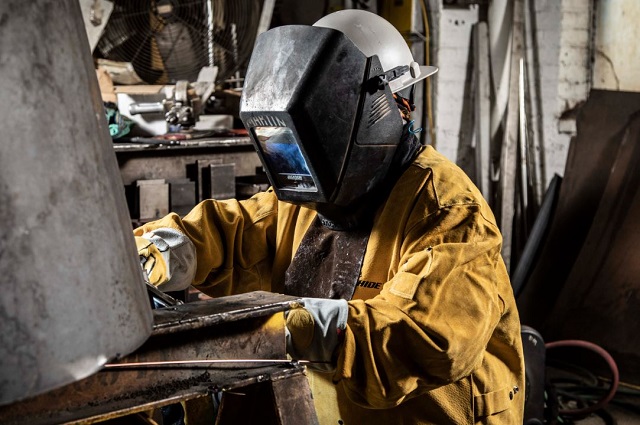
A welding jacket covers the arms, chest and back, offering broader protection than an apron for jobs that involve more movement or a higher spark count. These jackets are usually made from leather or a flame-resistant fabric, and many include features like snap closures rather than zips, since metal zips can conduct heat and cause discomfort. Choosing a jacket that fits well matters too, as one that’s too loose can catch on equipment while one that’s too tight limits movement.
Sleeves
Welding sleeves are a lighter alternative to a full jacket, covering just the arms while leaving the rest of the body free for better airflow in warmer conditions. They’re a practical choice when a jacket feels like too much for the task, yet bare arms would leave you exposed to sparks and heat. Many welders keep a pair on hand as backup welding safety equipment for jobs that fall somewhere between needing full coverage and needing none at all.
Welding Screens
Welding screens aren’t worn on the body, but they still count as important safety gear for welding since they protect other people nearby from arc flash and stray sparks. These portable barriers are set up around the work area to help prevent passersby or other tradespeople from accidentally looking at the arc without proper eye protection. On a shared worksite, screens are typically considered just as important as the personal protective gear worn by the welder.